
Your car’s transmission is one of its most complex and vital components. It’s responsible for transferring power from the engine to the wheels, allowing you to drive at different speeds. Proper maintenance is key to its longevity, and a simple but crucial task is regularly checking the transmission fluid. Learning how to check transmission fluid can save you from costly repairs and keep your vehicle running smoothly. This guide will walk you through the entire process, whether you have an automatic or manual transmission.
Why Checking Your Transmission Fluid is Important
Transmission fluid is the lifeblood of your transmission. It serves several critical functions:
- Lubrication: It lubricates the many moving parts within the transmission to reduce friction and wear.
- Cooling: It helps dissipate the immense heat generated during operation.
- Cleaning: It carries away small particles and debris, keeping the system clean.
- Hydraulic Pressure: In an automatic transmission, the fluid creates the hydraulic pressure needed to shift gears.
Low or dirty fluid can lead to serious problems like slipping gears, overheating, and eventually, complete transmission failure. Regularly checking the fluid level and condition is a proactive step to catch issues early.
Before You Begin: Safety First
Before you start, make sure you take a few safety precautions.
- Park your car on a level surface. This is essential for getting an accurate fluid level reading.
- Engage the parking brake firmly.
- Wear gloves to protect your hands from hot engine components and fluids.
- Have a clean, lint-free rag or paper towel ready.
How to Check Automatic Transmission Fluid
Most modern vehicles have an automatic transmission, and checking the fluid is a straightforward process. The key difference from an oil check is that the engine usually needs to be running and warm.
Step 1: Warm Up the Engine
For an accurate reading, the transmission fluid needs to be at its normal operating temperature. Drive your car for about 10 to 15 minutes to warm it up. This allows the fluid to expand and circulate properly.
Step 2: Locate the Transmission Dipstick
With the engine still running and the car in Park or Neutral (check your owner’s manual for the specific requirement), open the hood. The transmission fluid dipstick is typically located toward the back of the engine bay. It often has a brightly colored handle (red, orange, or yellow) and may be labeled “TRANS,” “ATF,” or with a transmission symbol. It looks similar to the engine oil dipstick but is usually longer.
Step 3: Check the Fluid Level
Follow these steps for an accurate check on your automatic transmission fluid levels:
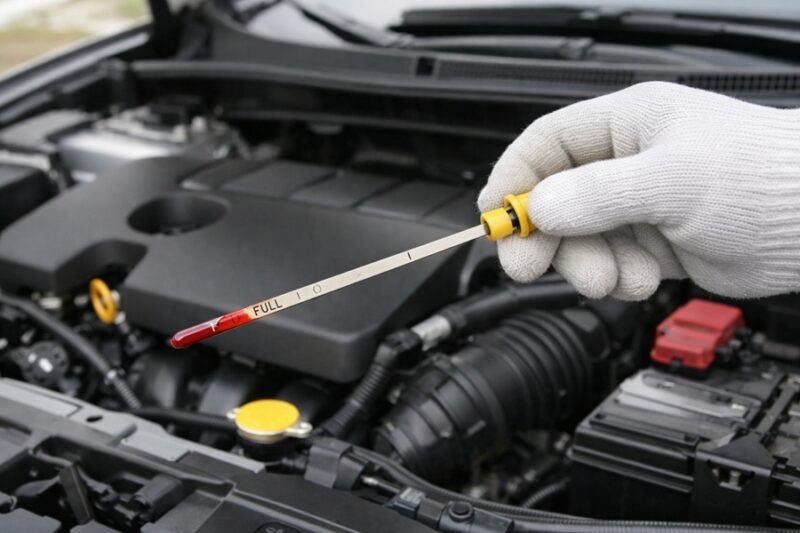
- Pull the dipstick out and wipe it clean with your lint-free rag.
- Fully reinsert the dipstick, then pull it out again.
- Look at the end of the dipstick. You will see markings indicating the proper fluid level. These might be labeled “FULL,” “ADD,” or have a cross-hatched area. Some dipsticks have two sets of markings: one for “COLD” and one for “HOT.” Since you’ve warmed up the car, use the “HOT” marking.
- The fluid level should be between the “FULL” and “ADD” lines. If it’s below the “ADD” line, you need to top it off.
Step 4: Examine the Fluid’s Condition
How the fluid looks and smells is just as important as the level.
- Color: Healthy automatic transmission fluid (ATF) is typically bright red or pink and translucent.
- Smell: It should have a slightly sweet, oily smell.
- Consistency: It should be smooth and free of debris.
If the fluid is dark brown or black, smells burnt, or has metal shavings or other particles in it, this is a sign of a serious problem. You should have your transmission inspected by a professional mechanic as soon as possible.
What About Cars Without a Dipstick?
Many newer vehicles are equipped with a “sealed” transmission that does not have a dipstick. The manufacturer intends for this fluid to last the lifetime of the vehicle, but problems can still occur. Checking the fluid in a sealed transmission is more complex and often requires special tools and a vehicle lift. It typically involves removing a check plug on the side or bottom of the transmission case.
If you have a sealed transmission and suspect an issue, it is highly recommended that you take your car to a qualified mechanic to have the system inspected.
How to Check Manual Transmission Fluid
Checking the fluid in a manual transmission is a different process. The engine should be off and cool for this check.
- Lift the Vehicle: You will need to safely lift the vehicle using a jack and support it with jack stands. You must be able to get underneath it.
- Locate the Fill Plug: On the side of the transmission case, you will find two plugs: a fill plug and a drain plug. The fill plug is located higher up than the drain plug.
- Check the Level: Using a wrench, remove the fill plug. The fluid level should be right at the bottom edge of the fill plug hole. You can check this by sticking your finger (with a glove on) into the hole. If you can feel the fluid at the opening, the level is correct.
- Inspect and Refill: If the level is low, you will need to add the correct type of manual transmission fluid until it starts to seep out of the fill hole. Use a fluid pump to make this process easier.
Maintain Your Transmission for the Long Haul
Now that you know how to check transmission fluid levels, you can make it part of your regular vehicle maintenance routine. Checking it once a month or every few oil changes is a good practice. This simple, five-minute task can help you spot potential issues before they become major, expensive repairs. By keeping an eye on your transmission fluid, you are investing in the health and longevity of your vehicle. If you ever feel unsure or notice signs of a problem, don’t hesitate to consult a trusted mechanic.
You can also refer to this detailed transmission fluid level check guide for additional tips and variations.
Frequently Asked Questions (FAQs)
Can I drive my car with low transmission fluid?
It is highly discouraged to drive with low fluid levels. Low fluid can cause the transmission to overheat, gears to slip, and can eventually lead to a complete and expensive transmission failure.
What color should healthy transmission fluid be?
Healthy Automatic Transmission Fluid (ATF) is typically bright red or pink and translucent. If the fluid looks dark brown, black, or cloudy, it is time for a fluid change or a professional inspection.
How often should I check my transmission fluid?
As a part of regular maintenance, it is a good practice to check your fluid levels once a month or every time you get an oil change. Early detection of leaks can save you thousands in repair costs.
What are the signs of low transmission fluid?
Common warning signs include difficulty shifting gears, jumping or grinding noises during acceleration, a burning smell, or a noticeable delay in vehicle movement when shifting into Drive or Reverse.
Troubleshooting & Fluid Health
What color should transmission fluid be?
Healthy automatic transmission fluid is typically a bright, translucent red or pink. This color makes it easy to distinguish from engine oil and helps you spot leaks.
What does it mean if the fluid is brown or black?
If the fluid is dark brown or black, it is likely old, oxidized, or contaminated. This suggests it is no longer lubricating effectively and needs to be changed. If it is black and has a burnt smell, it indicates internal damage to the transmission, and you should see a mechanic immediately.
Can I just add more fluid if it’s low?
Yes, if the level is low, you can top it off. However, be extremely careful not to overfill it, as this can cause foaming and erratic shifting. Also, transmission fluid doesn’t “burn off” like engine oil. If the level is low, it usually means there is a leak that needs to be found and fixed.
My car doesn’t have a dipstick. How do I check it?
Many modern cars have “sealed” transmissions. These do not have a user-accessible dipstick and are designed to be “maintenance-free” for a long period. However, leaks can still happen. If you suspect a leak or shifting issues with a sealed transmission, you should take your vehicle to a professional mechanic who has the specialized tools to check the level via a plug on the transmission case.
What are the signs of low transmission fluid?
Common symptoms include:
- Slipping gears (the engine revs but the car doesn’t accelerate properly)
- Rough or delayed shifting
- A burning smell
- Unusual noises like whining or clunking
- Transmission overheating warnings on your dashboard

